
Long before bourbon became a Kentucky icon and craft distilleries began appearing across the country, George Washington was making whiskey at Mount Vernon.
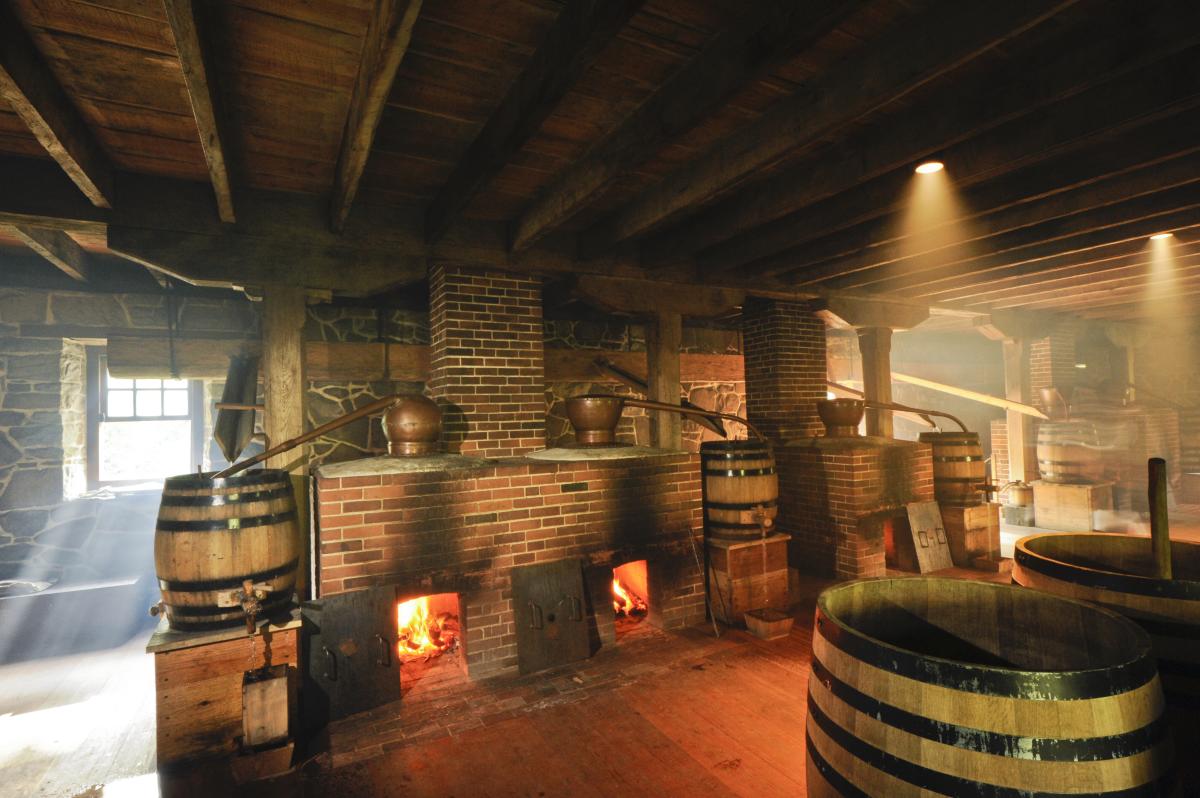
By 1799, Washington’s distillery was producing nearly 11,000 gallons of whiskey a year, making it one of the largest whiskey distilleries in America. Today, visitors can step inside George Washington’s Distillery® and Gristmill, a faithfully reconstructed, working version of that distillery, and see how Washington turned grain, water, fire, and ingenuity into a thriving commercial enterprise.
So, it’s fitting that Washington’s distillery marks the Gateway to the American Whiskey Trail, an educational tour of some of our nation’s most famous operating distilleries and the historic sites associated with them.
Each weekend from April through October, George Washington’s Distillery® and Gristmill is more than just a place where history is displayed. It’s a functioning site you can explore while grains are being processed and whiskey is being made before your eyes.
George Washington, the Entrepreneur
Most people know George Washington as the general who led the Continental Army and as our nation’s first president. Far fewer realize that he was also an innovative farmer and an ambitious businessman.
Washington was constantly looking for ways to make his plantation at Mount Vernon more productive. He experimented with agriculture, managed livestock, operated a gristmill, and pursued commercial enterprises that could turn the resources of the estate into income. Whiskey became one of his most successful ventures.
James Anderson, Washington's Scottish farm manager, had experience distilling both in Scotland and Virginia. He encouraged Washington to establish a commercial distillery, and Washington recognized the opportunity. An exploration that began with two stills quickly became something much larger.
Construction on a dedicated distillery began in 1797. When completed in 1798, the building was approximately 75 feet long and 30 feet wide and contained five copper pot stills with a combined capacity of 616 gallons. This wasn't a gentleman experimenting with a still as a hobby. It was a profitable business.
By 1799, Washington's ledger recorded more than 80 sales transactions totaling 10,942 gallons and valued at $7,674.
The Recipe for Washington’s Success
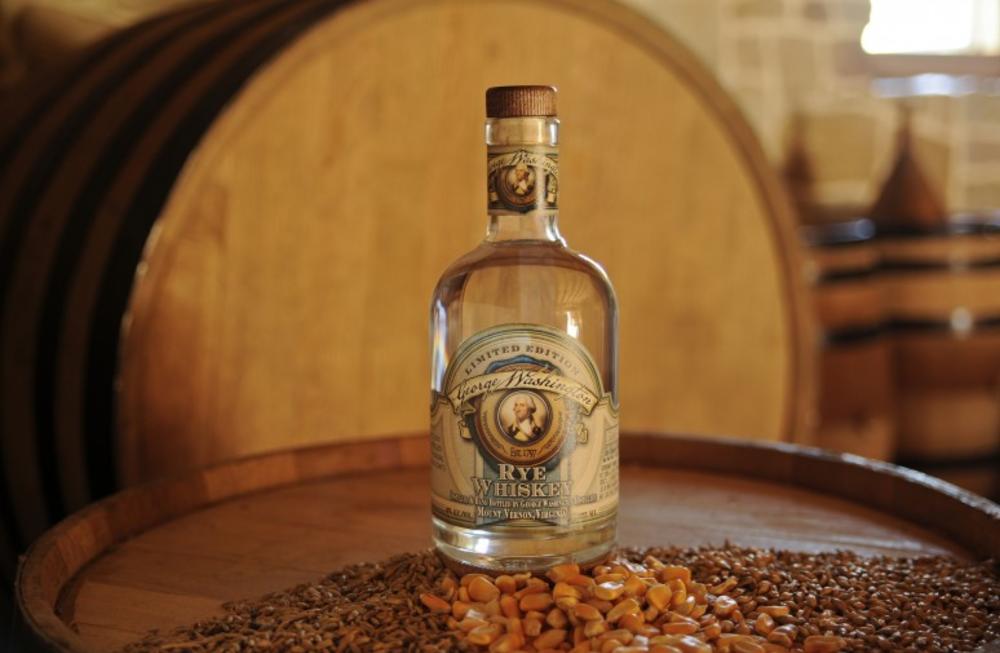
The whiskey produced at Mount Vernon was primarily rye whiskey, made from a mash of 60% rye, 35% corn, and 5% malted barley.
The grain was ground at Washington's water-powered gristmill before being fermented in wooden mash tubs. The resulting liquid was distilled in copper pot stills heated by wood fires. Water from nearby Dogue Creek was used to power the mill and cool the vapor produced during distillation.
Washington's whiskey was generally distilled at least twice and, unlike much of the whiskey sold today, it was sold unaged in uncharred wooden barrels, then moved quickly into the marketplace. The goal wasn’t to make a collectible bottle. It was to create a product people wanted while turning the resources of Mount Vernon into cash.
That practical approach is what makes Washington's distillery an especially fascinating stop for today's whiskey enthusiasts. You're not simply learning about a historic recipe in an historic location. You're seeing an early American entrepreneur figuring out how to build a scalable business around a distinctly American product.
The People Who Made the Whiskey
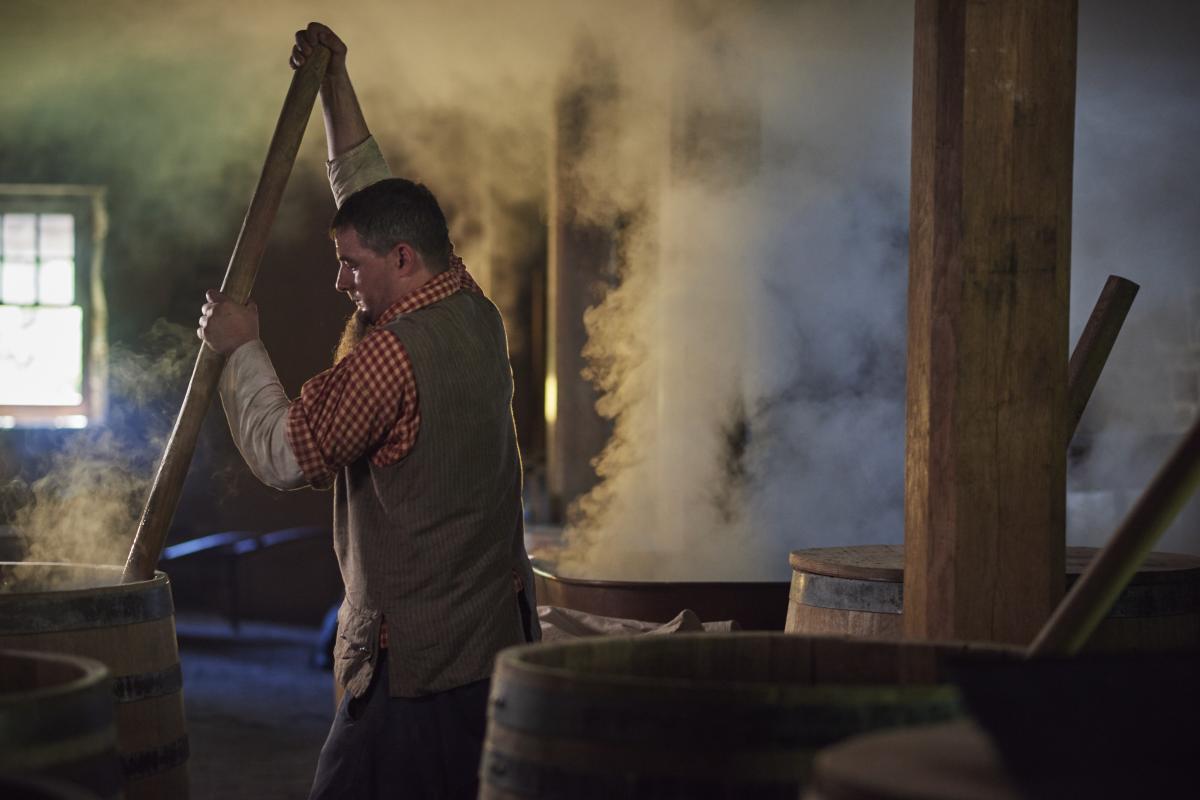
Showing how whiskey is made today using same methods as in 18th century; image courtesy Virginia Tourism Corporation
Six enslaved distillers—Hanson, Peter, Nat, Daniel, James, and Timothy—performed the demanding work of making the whiskey. Distilling was hot, physically exhausting, highly skilled work and their expertise was essential to the operation's success.
Visitors don't just learn how Washington's whiskey was made. They can learn about the people whose labor made the enterprise possible—and about the complicated reality of life and work at Mount Vernon.
It is an important reminder that the story of American whiskey is not just about innovation and entrepreneurship, but also of labor, power, wealth, and slavery.
For more insight into both slavery and emancipation in the wake of George Washington’s death and the era of the Civil War, nearby Gum Springs tells the tale. Founded by a former slave of George Washington, West Ford, Gum Springs was a free black community that thrived on the line between North and South and today, still, is the oldest African American community in Fairfax County.
Resurrecting George’s Historic Distillery
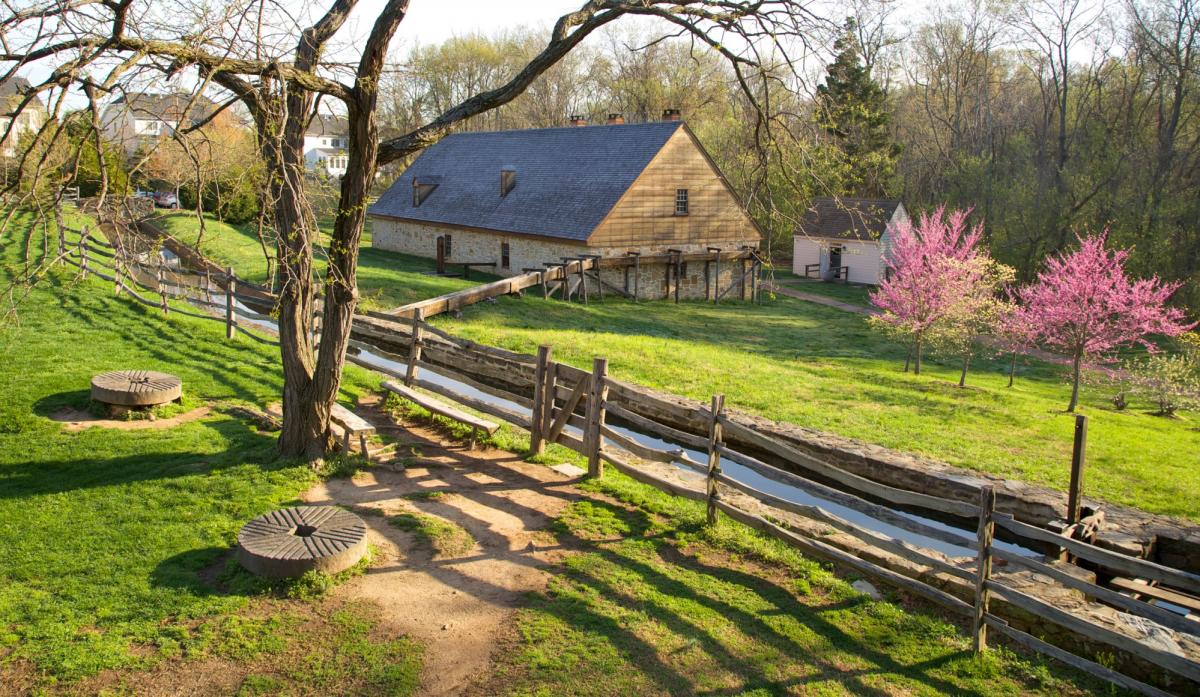
After Washington died in 1799, the operation eventually declined. A fire destroyed the distillery in 1814, and the building was never rebuilt. For generations, the site remained largely archaeological evidence of what had once stood there. Then researchers began putting the pieces together.
Mount Vernon launched archaeological and documentary research into the distillery site in 1999. Excavations uncovered foundations, drainage systems, locations associated with the stills and boiler, and artifacts that helped researchers understand how the building functioned.
The reconstructed distillery opened in 2007. And today, it is once again a working distillery.
What Can You Experience at the Distillery Today?

George Washington’s Distillery & Gristmill is located about 2.7 miles from Mount Vernon's main estate entrance. It can be visited as part of a Mount Vernon admission or separately.
- Tour the Distillery. See where Washington made his whiskey and learn about the methods used to reproduce the process today.
- See the Whiskey Being Made. To make the whiskey, the distillery team still uses 18th-century methods inspired by Washington's original operation, including wooden mash tubs and copper pot stills heated by wood fires. Grain is also ground on site using the reconstructed and operational water-powered gristmill.
- Tour the Gristmill. The reconstructed gristmill on site demonstrates the full breadth of the operation. They’re not just distilling spirits here. The water-powered millstones still grind grain as they would have in the 18th century.
- Taste Washington's Whiskey. Sample spirits produced at Washington's distillery at special whiskey tasting events on select Saturdays – or try the craft beverages in the Mount Vernon Inn Restaurant, located adjacent to the main estate site.
- Take a Piece of the Story Home. In 2017, George Washington's Rye Whiskey became the official state spirit of the Commonwealth of Virginia. The gift shop at the Distillery & Gristmill site and also in the main Shops at Mount Vernon offer spirits and other products connected to the estate's agricultural and culinary history, giving visitors a chance to take a piece of the experience home.
- Commemorate America’s 250th. The distillery has released special edition spirits for America’s 250th celebrations in 2026. Get these while you can, as they are extremely limited.
Make The Distillery Part of Your Historic Potomac Banks Visit
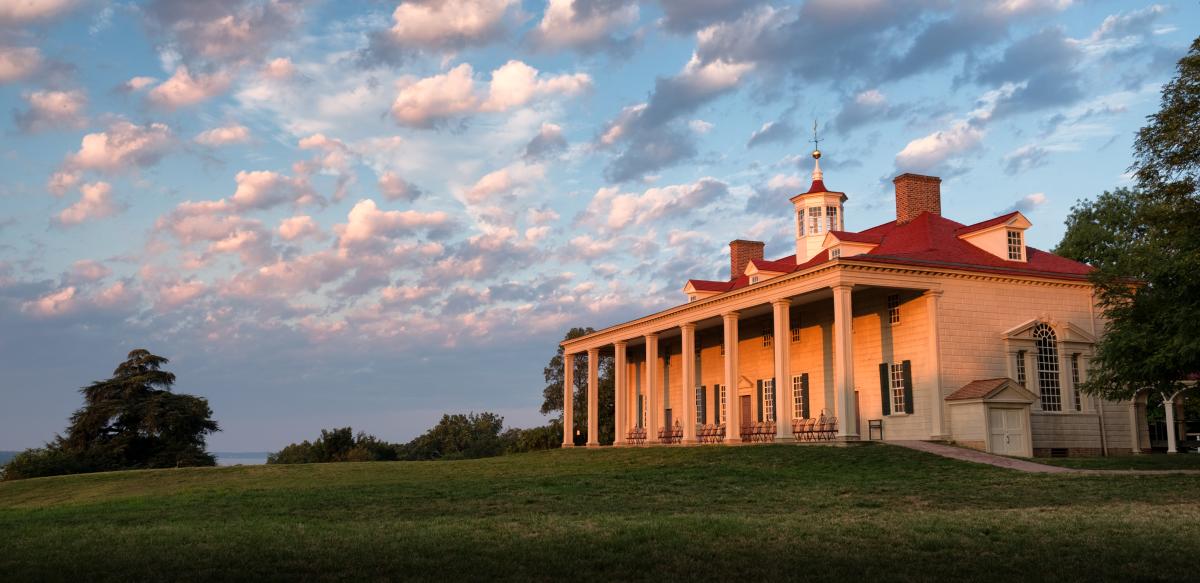
The distillery is particularly easy to incorporate into a broader Mount Vernon trip or an exploration of Northern Virginia’s most historic corridor, Potomac Banks. At Mount Vernon, you can explore George & Martha’s mansion, stroll the gardens and historic buildings, take specialty tours and attend signature events, dive deeper into the history at the newly renovated Museum and Education Center, dine in the restaurant and newly renovated food hall, and pick up souvenirs in the gift shops. The Distillery & Gristmill is only a short drive away, making it possible to see another side of Washington's life beyond the presidential portraits and Revolutionary War stories.
Nearby Mount Vernon and the Distillery & Gristmill in this Potomac Banks corridor, you can also visit:
- Woodlawn, the home George Washington built for Martha’s granddaughter, Nelly. This site was later owned by Quakers who employed free blacks during the Civil War.
- The National Museum of the United States Army, with more than 250 years of military history told through the eyes of the soldiers.
- Gunston Hall, the home of founding father George Mason, whose words formed the foundation of our Bill of Rights.
- Pohick Church, the church both George Washington and George Mason worshipped at, with pre-Revolutionary and Civil War history.
- Workhouse Arts Center, an historic prison that played a major role in women’s rights and is now an arts center where you can see art being made and purchase it for your home.
- Parks, including the scenic George Washington Memorial Parkway, the wildlife marshlands at Huntley Meadows, and the bald eagle sanctuary at Mason Neck State Park.
You’ve met George Washington as an American hero and president. Now it’s time to meet him as a successful distiller. It’s a side of George that few see: the farmer thinking about yields, the businessman watching markets, the entrepreneur looking for new opportunities, and the manager building systems that could operate on a substantial scale. See our most beloved founding father through new eyes at George Washington’s Distillery and Gristmill.