
Taxation without representation. Denial of fair trials by a jury of peers. Restricted trade, forcing higher prices. An inability to expand westward into the New World. Obstructing laws that would enable self-governance. By 1765, colonists had had enough of King George and the way he ruled over the 13 colonies. And, in 1776, they ultimately wrested their freedom from the crown as a result of the Revolutionary War.
2026 marks the 250th anniversary of the American Revolution and the founding of the United States of America. With special events and activities planned throughout the year to celebrate this occasion, the time is ripe to plan a journey into the military history that shaped our nation.
Here’s just a peek of what you’ll find when you plan a 250th anniversary trip to Fairfax County and Washington, DC throughout 2026.
Years 1-250—Getting to know the US Army
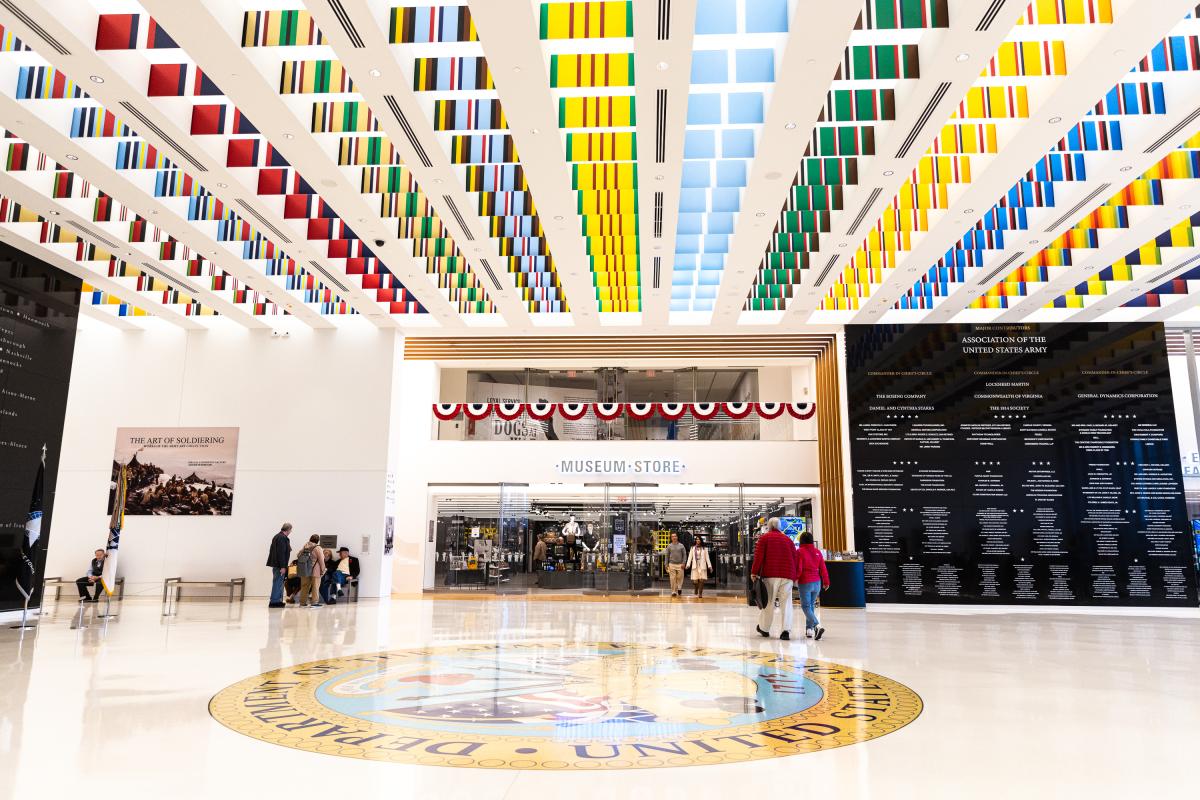
If there is one place in the United States that you can go to understand the full breadth of military history, it’s the National Museum of the US Army. Situated on the publicly accessible lands of the Fort Belvoir installation, it tells the tale of all 250 years from the perspectives of the Soldiers themselves and the international conflicts they found themselves taking part in.
Formed in 1775, our Army has stood fearless in the face of threats to our democracy and our freedoms. While it may be the oldest and largest of our branches of service, it has not defended our nation alone. On your military tour, be sure to include the sites below:
- National Museum of the Marine Corps, located about a half hour south of Fairfax County, adjacent to the Marine Corps Base in Quantico, VA.
- United States Air Force Memorial, most striking when the rising sun lights up its three stainless steel spires configured to represent the contrails of the Thunderbirds.
- United States Navy Memorial, featuring the “Granite Sea” map of the world, towering masts, and the Lone Sailor Statue.
Years 1-25—Carving out freedom during the Revolutionary War era
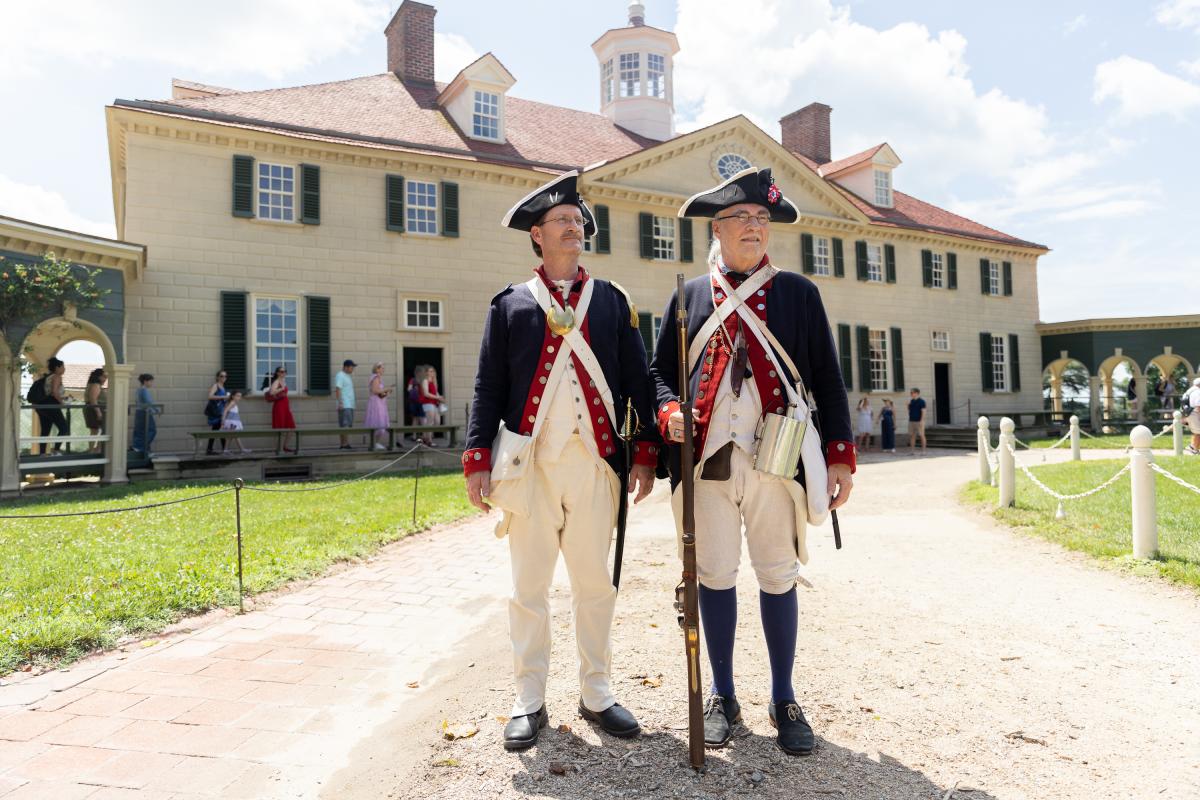
You won’t find a better place to explore the American Revolution than the homes of two of the men who founded our nation. If there could be only one founding father, everyone would agree upon George Washington, who led our fledgling army to victory over the British. Everything from his thoughts, dreams, strategies, and stances can be discovered at his home (one of America’s most popular historic estates), Mount Vernon. (Be sure to check out all of the activities and new exhibits planned for the 250th at Mount Vernon!)
But wait. There’s another George who may be a bit lesser known, but who architected our Bill of Rights—George Mason. His home at Gunston Hall was practically within sight of Mount Vernon. Imagine: neighbors who lived at the same time and both left a huge impact on our nation that is still felt 250 years later. Here are some additional sites of Revolutionary War interest:
- Pohick Church, built before our nation was founded, it was where both George Washington and George Mason worshipped.
- George Washington’s Presidential Library. Open by appointment for researchers, this library holds a wealth of information about the colonial and Revolutionary War eras.
- George Washington’s Distillery and Gristmill. Even heroes need a shot of whisky now and again. George Washington had his own distillery that still makes whiskey to his specifications.
- CALL TO Arms: The Soldier and the Revolutionary War. This display and events at the National Museum of the US Army capture what life was like for soldiers during that era.
- Other Events. Keep an eye on events as the 250th draws nearer.
Years 26-125—Uncovering the true meaning of independence during the Civil War era
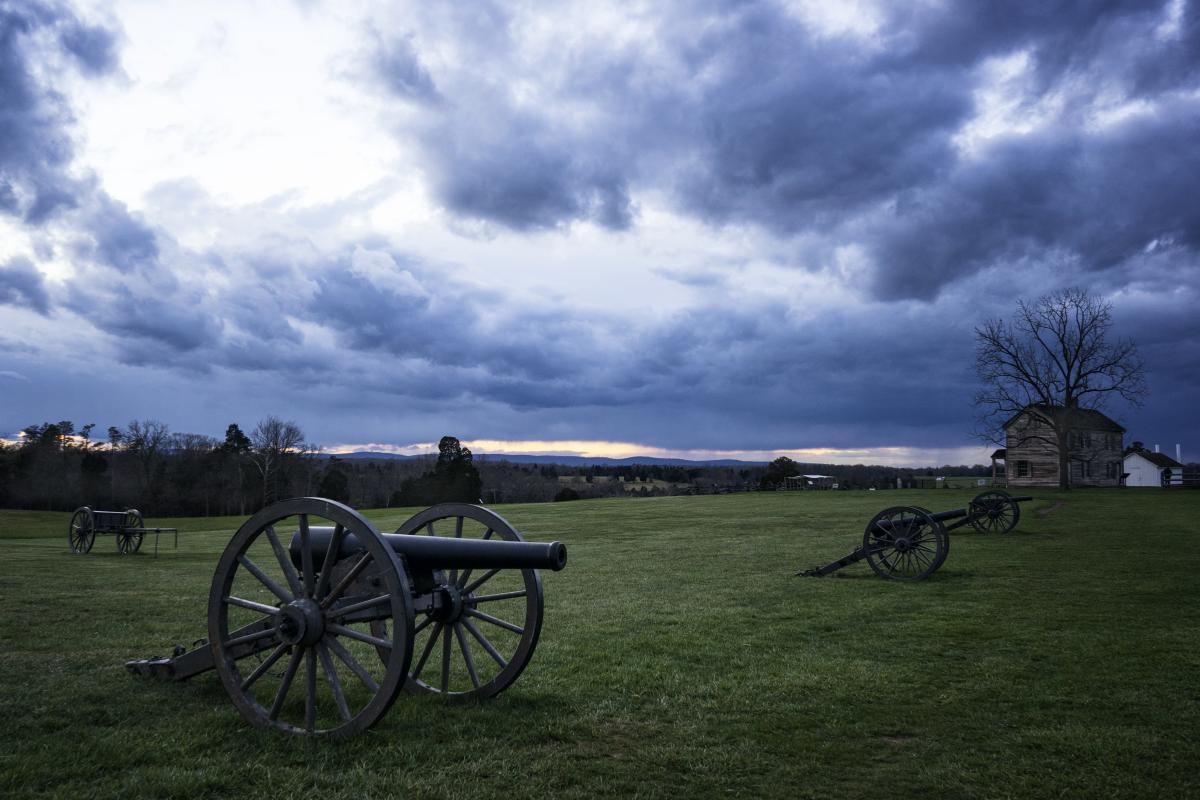
Once free from British rule, the new Americans had to discover who they were and what they stood for. In the mid-1800s, those values erupted into a Civil War. Virginia was unique among all the states at the time, first because 60% of the war’s battles were fought in the Old Dominion. There are battlefields throughout the state, including the famed Manassas National Battlefield Park, where two major battles were fought, and Ox Hill Battlefield, where two Union generals lost their lives.
The second unique thing happened up here in Northern Virginia. While Virginia primarily fought for the South in the war, there were parts of Northern Virginia that remained under Union control throughout the war. And there were even free Black communities within the Confederate-controlled Virginia. This made for a very interesting dynamic as the line between north and south was not drawn at state borders, but through occupation points, some of which moved back and forth throughout the war. The parts of Fairfax County that never went to the South during the war were due to a ring of Union forts that reached into Fairfax County to protect the federal capital.
From Quakers who lived in a former George Washington property and eschewed all participation in the war to Clara Barton, who began her nursing career in the wake of Second Manassas, to a slew of female spies, the Civil War-era stories told here are colorful and fascinating.
Among the countless nearby sites you can visit for Civil War history, don’t miss:
- Arlington National Cemetery. In an act of cruelty and war, Robert E. Lee’s beloved home was turned into a cemetery that would remind generations of the choice he made to lead the South in the Civil War. Today, more than 400,000 of our nation’s bravest take their final rest in Arlington. As an FYI, you can take the Metro directly to the cemetery.
- Pohick Church. During the Civil War, Pohick Church was the site of the first aerial reconnaissance in war (hot air balloon), and it was subject to graffiti and bullet holes, all of which is still present for eagle eyes to spy.
- Historic Fairfax Courthouse. The first land casualty of the Civil War happened at Fairfax Courthouse. Outside of that, the property changed hands many times during the war and was pillaged by restless soldiers.
- Historic Blenheim. This stop in the City of Fairfax is an absolute must. The home contains over 100 examples of Civil War graffiti that were found under wallpaper throughout the house and attic.
- The Winery at Bull Run. When you build a winery adjacent to a battlefield, you’re bound to find some artifacts. This winery houses 200,000 Civil War artifacts and has made its own museum for people to learn about the site’s history.
Years 126-250—Exploring innovation and military dominance during multiple wars
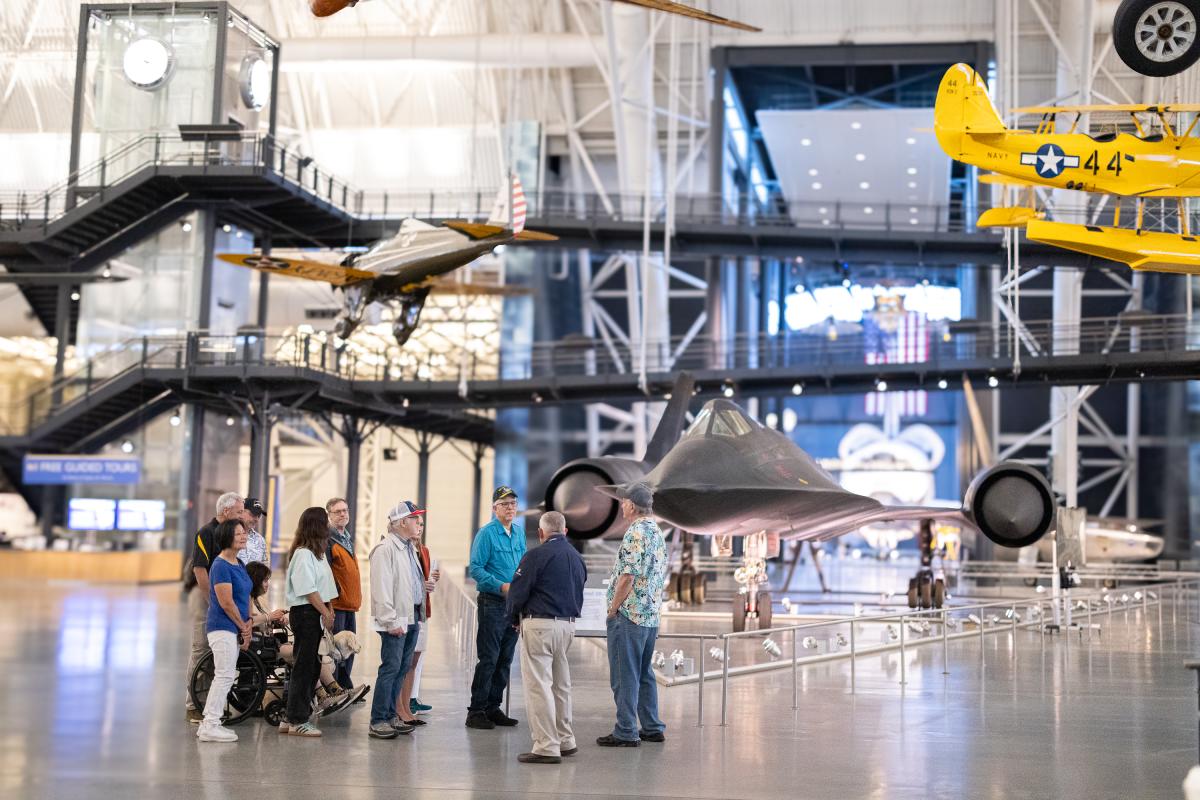
The 1900s brought numerous wars and numerous advancements in warfighting for our military heroes. Chief among those advancements was aviation. The Washington, DC region boasts the world’s premier collection of aviation and space artifacts, spread out over two museums—the Smithsonian’s National Air & Space Museum and the Smithsonian’s National Air & Space Museum Steven F. Udvar-Hazy Center.
The Udvar-Hazy Center is the larger of the two behemoths and is located in Fairfax County, adjacent to Dulles International Airport. It contains Space Shuttle Discovery, a Concorde, an SR-71 Blackbird, the Enola Gay and more than 200 other notable aircraft from around the world. The collection shows the breadth of American ingenuity and innovation accomplished in a relatively short period of time for transportation, space exploration and warfighting.
Curious minds of this military era should also check out these monuments, memorials and sites:
- Fort Hunt Park. Known simply as PO Box 1142, this fort was used during WWII as a top-secret POW camp where leaders cajoled secrets out of top-tier prisoners like rocket scientist Werner Von Braun, spymaster Reinhard Gehlen and Heinz Schlicke, inventor of infrared detection.
- Vietnam Veterans Memorial, honoring the 58,000 American soldiers who died during the Vietnam War.
- Iwo Jima Memorial, depicting one of the most palpable moments of WWII when soldiers raised the American flag on Iwo Jima. This is also known as the US Marine Corps War Memorial.
- WWII Memorial, with its granite pillars honoring those from the US and territories who served in WWII.
- Pentagon Memorial, honoring those who died in the 9/11 attack on the Pentagon. If you go here, plan ahead and arrange a tour of the Pentagon.
- Korean War Veterans Memorial, honoring those soldiers who died during the Korean War.
- Franklin Delano Roosevelt Memorial, featuring the words and thoughts of the president who led us through WWII.
It’s hard to believe the United States is already 250 years old. The semiquincentennial is bound to be a patriotic time with many activities and events to explore at a milestone that is significant for our nation.
To get a good grip on where we’ve been and where we’re headed, there’s no better place to drink it all in than Fairfax County and the Washington, DC area. From our monuments, memorials and museums to historic sites reflecting both physical and social battles, we have been – and will continue to be – at the center of history for more than 250 years.